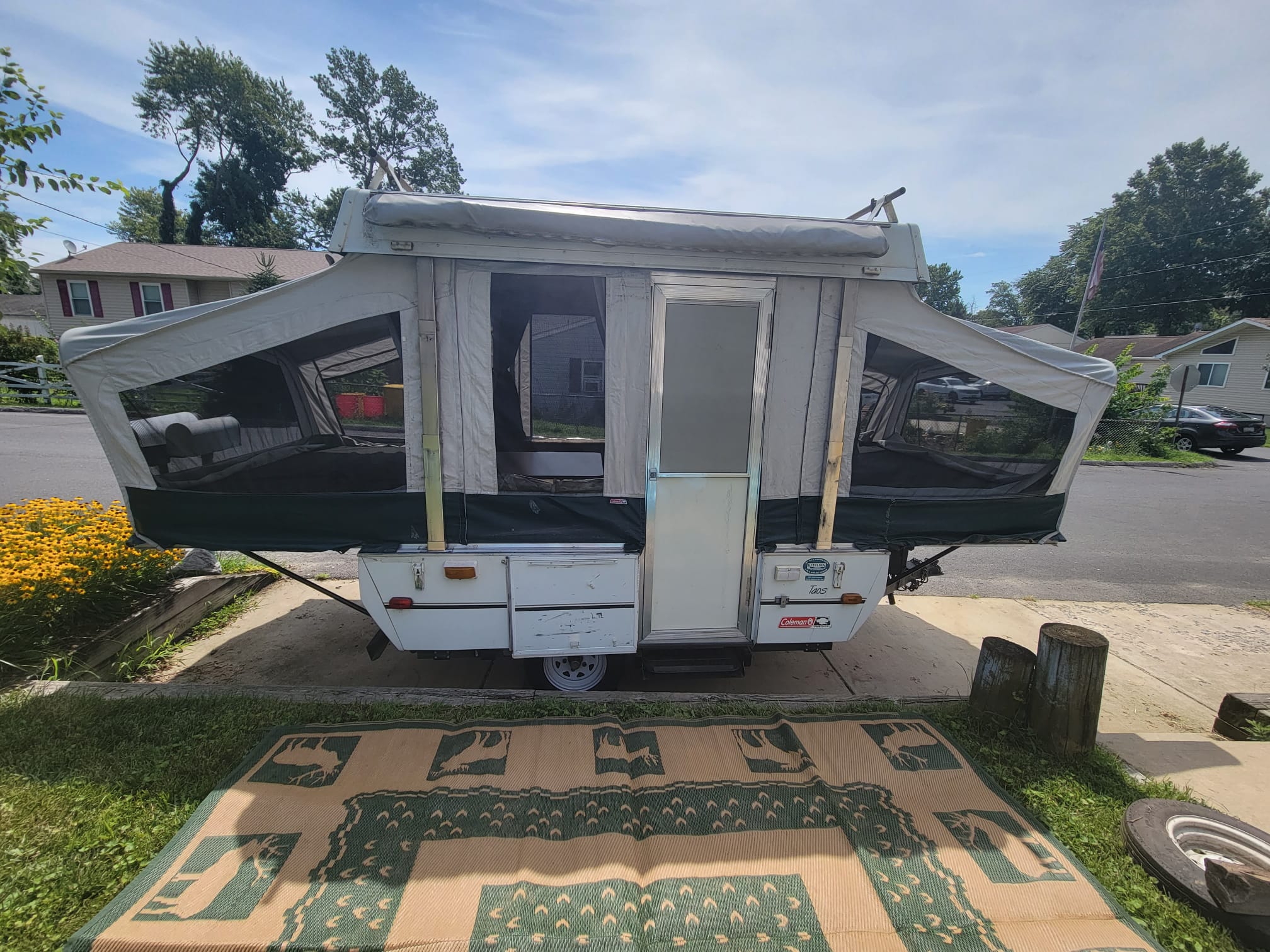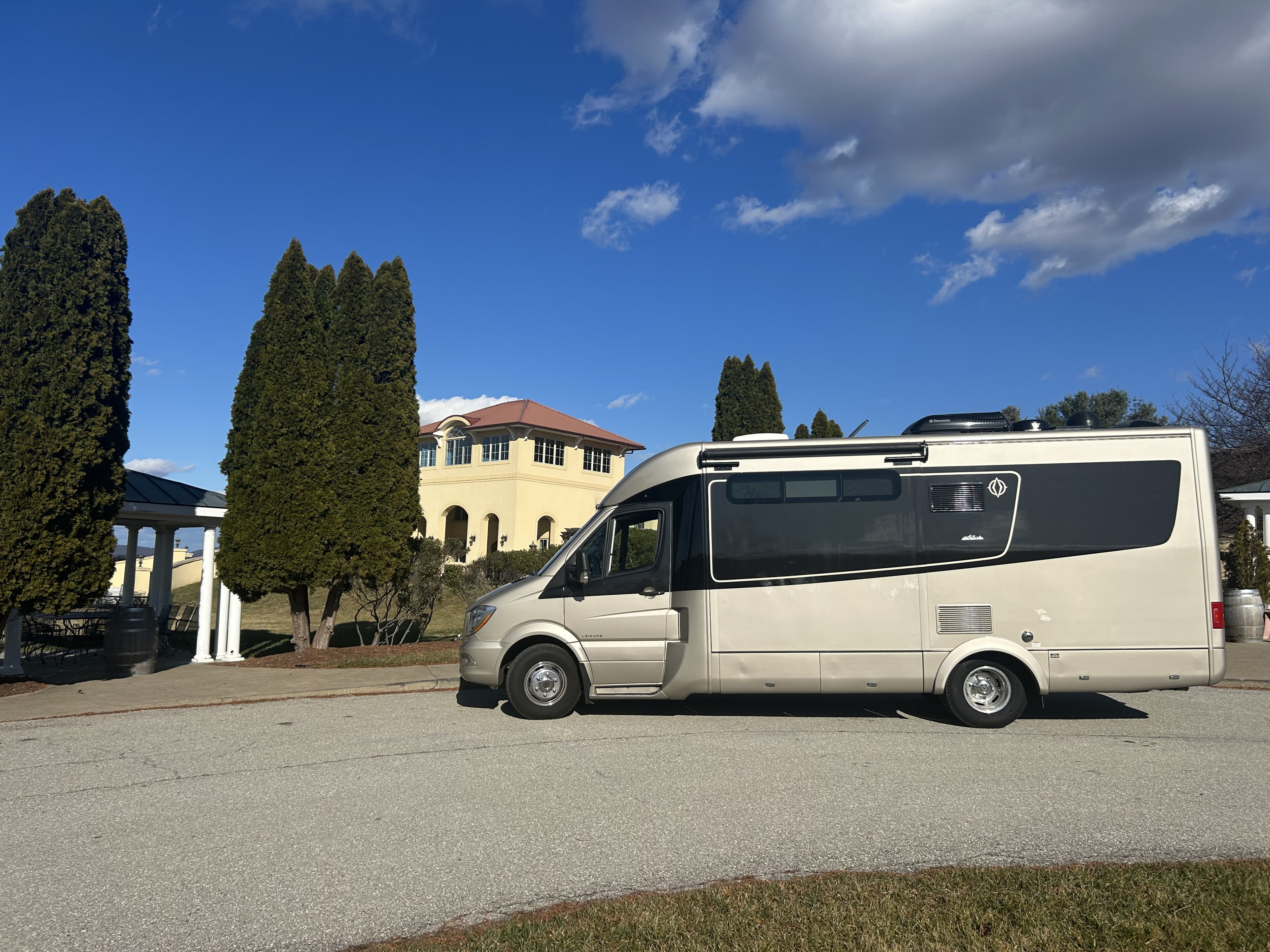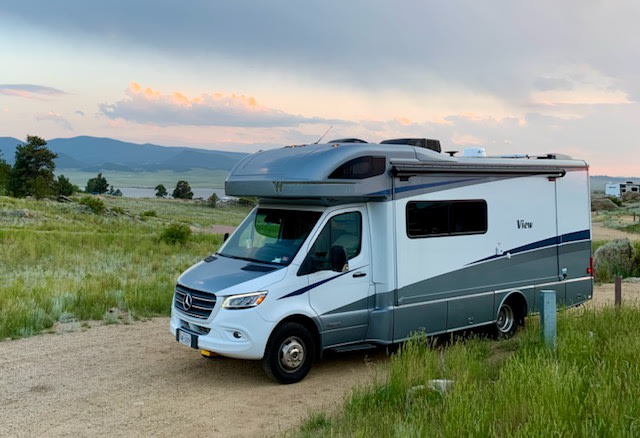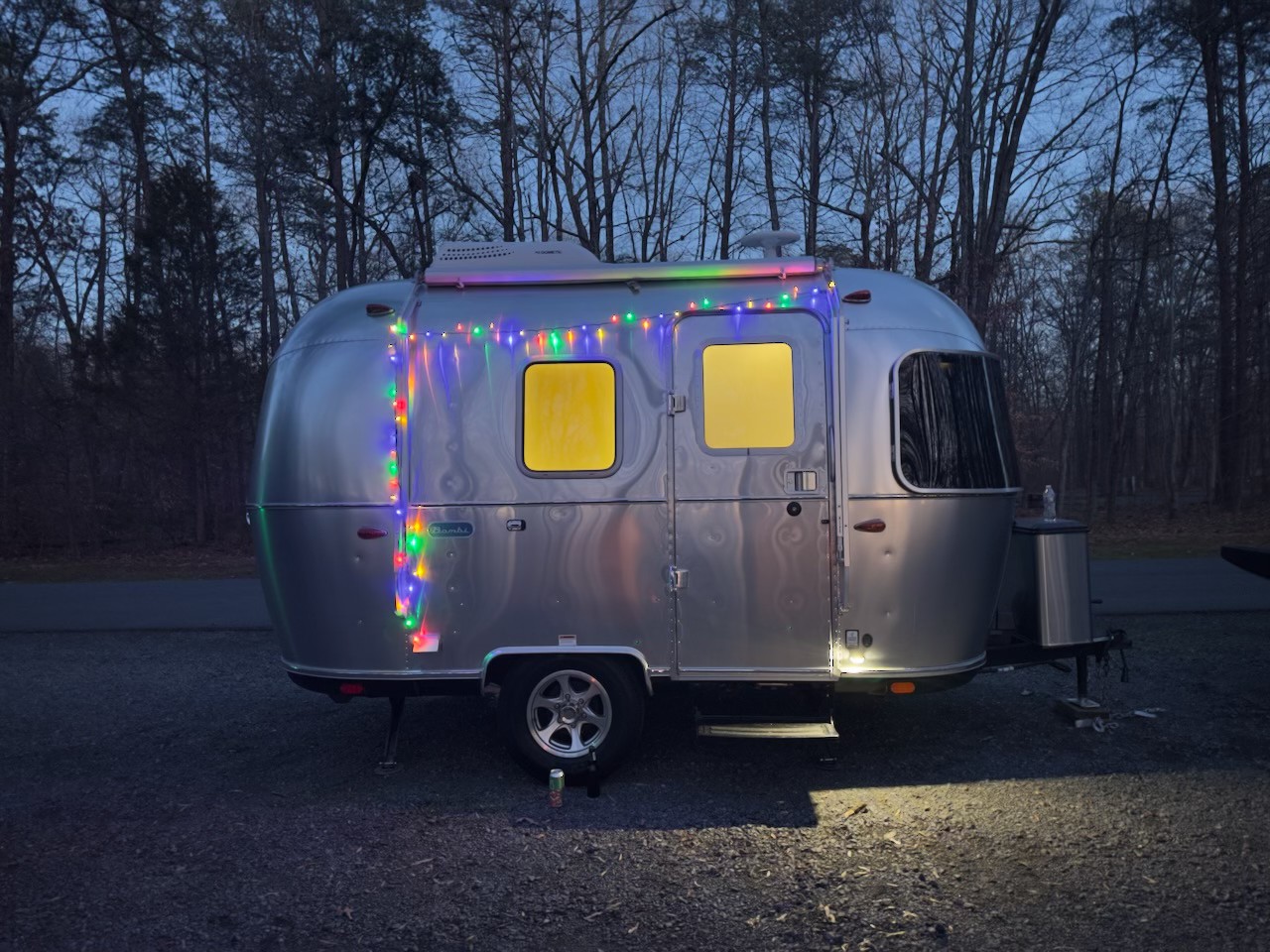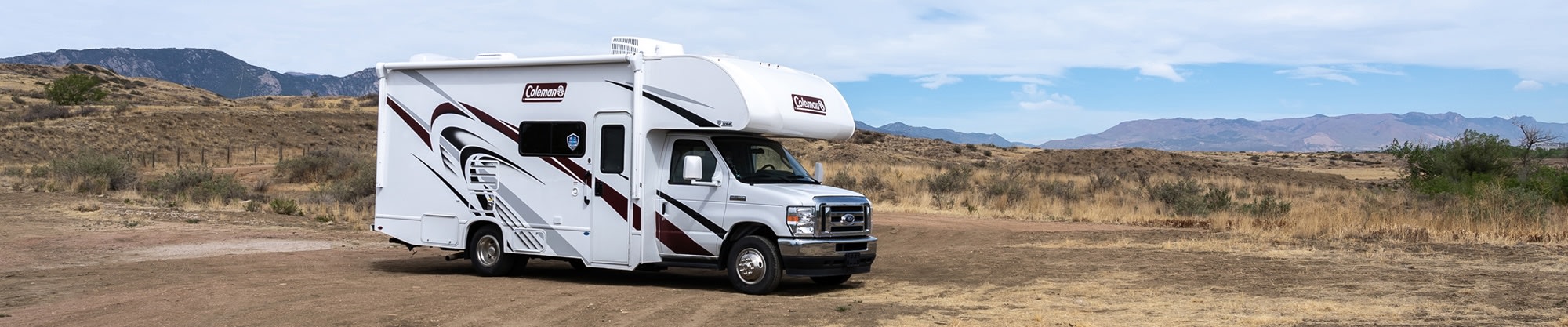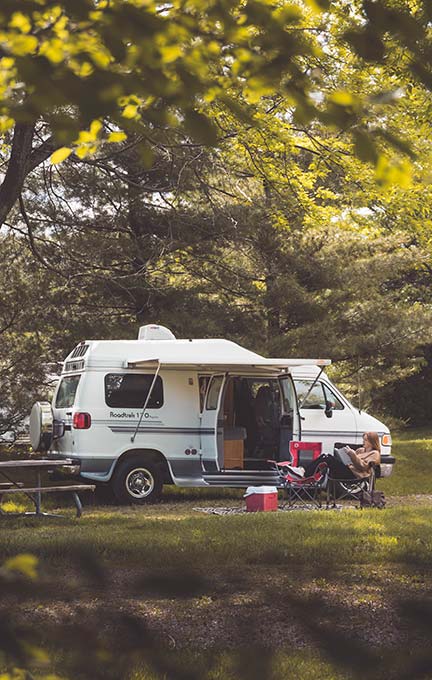

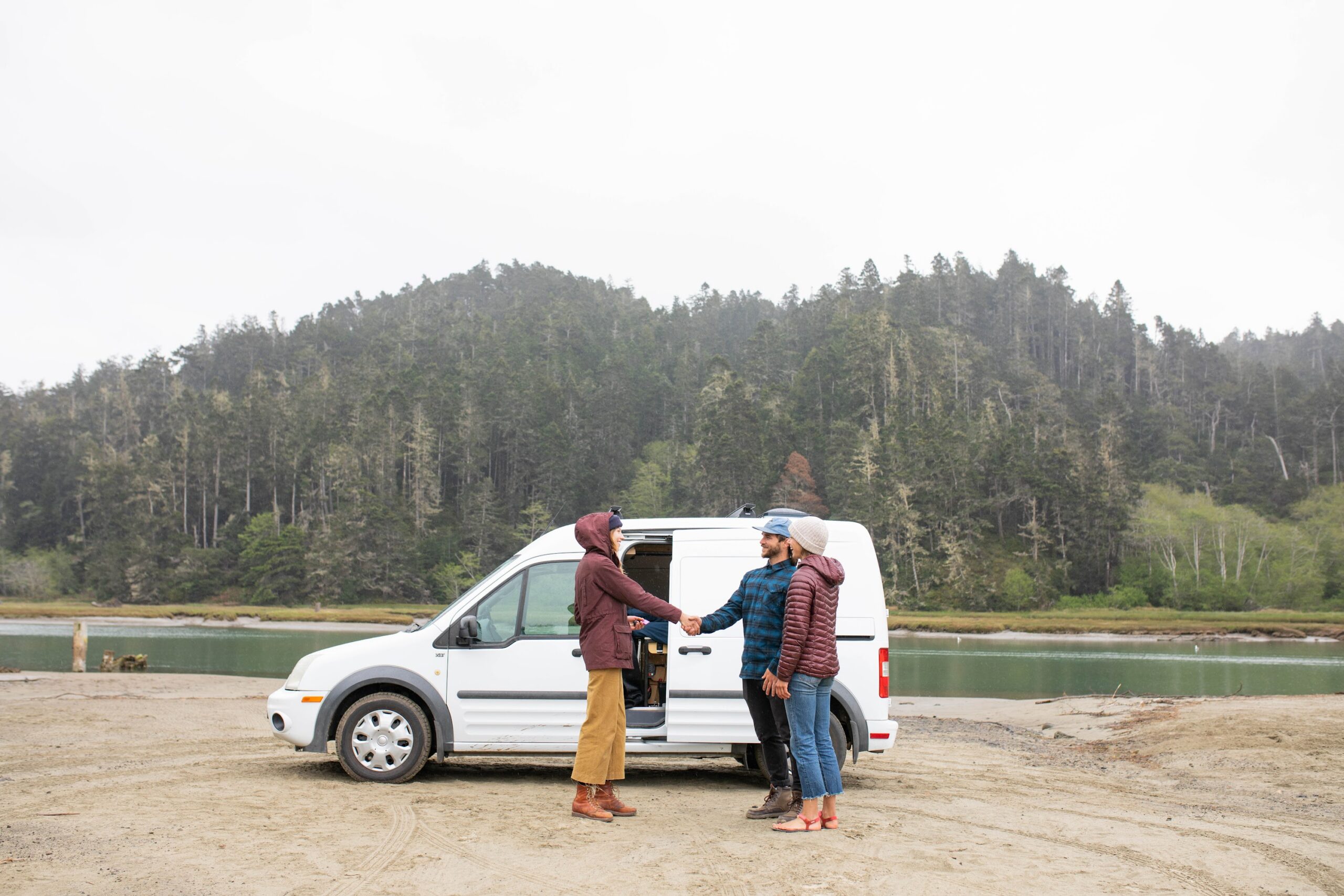
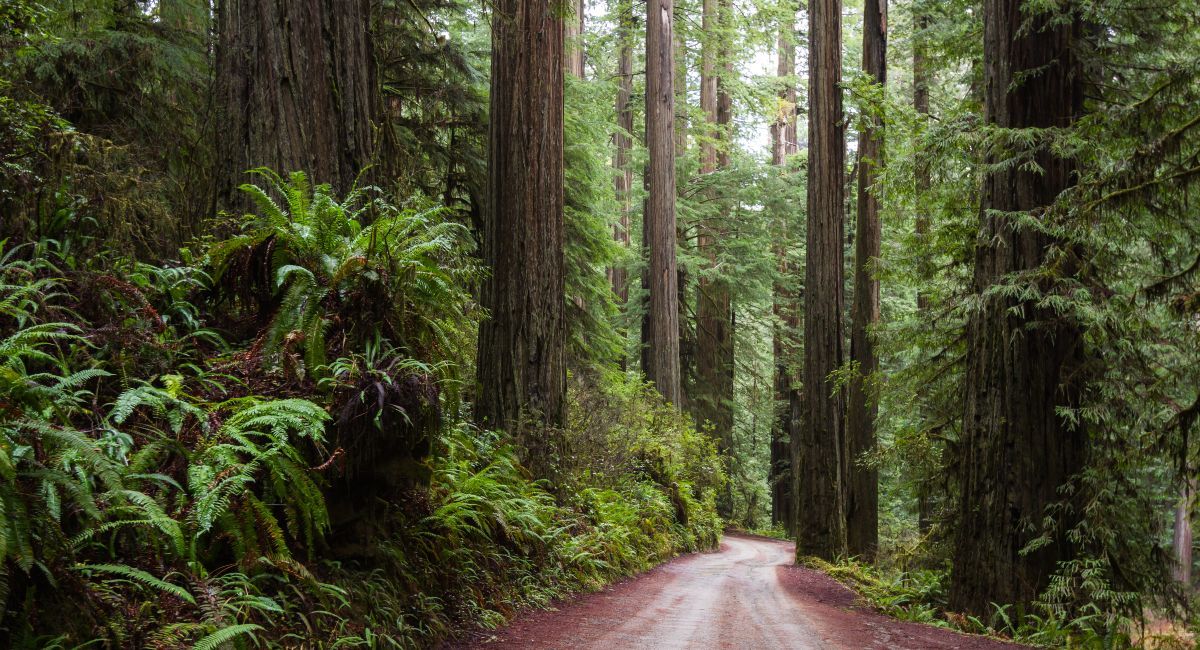
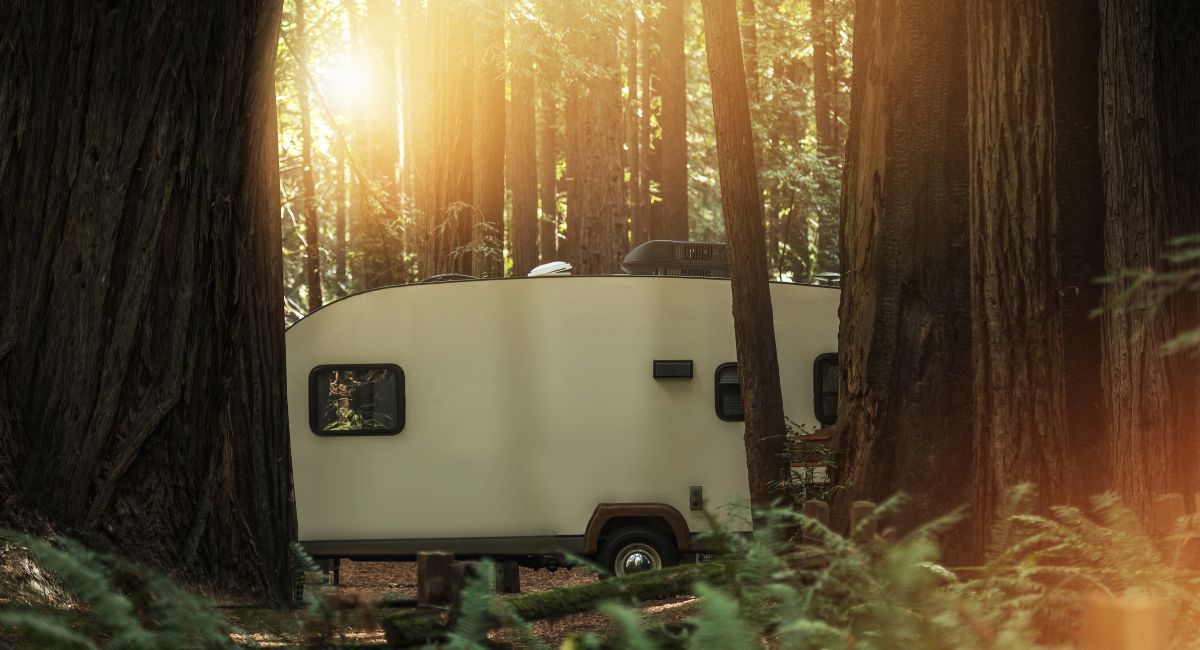
The Redwoods are the park where your RV feels small — not because the campground sites are tight (though they are), but because the trees are 300 feet tall and your rig barely reaches the first branch. We see it in rental photos every season: renters park their van under a grove and it disappears into the scale of the forest.
Redwood National and State Parks is actually four parks in one — one national park and three California state parks — stretching 40 miles along the Northern California coast. The campgrounds here have the tightest RV size limits of any major national park (24–28 feet max), but the scenic drives through old-growth groves are something you won't find anywhere else on Earth.
At a Glance
- Four parks, one complex. Redwood National Park (no entrance fee) plus Jedediah Smith, Del Norte Coast, and Prairie Creek Redwoods state parks
- Four developed campgrounds, all state-managed. $35/night, reservations via ReserveCalifornia.com. Year-round camping at three of four
- Small rigs only. RV limits are 24–28 feet across all campgrounds — sites were built in the 1940s and cannot accommodate modern large RVs
- No hookups anywhere. All dry camping. Dump stations at Jedediah Smith and Mill Creek
- The drives are the experience. Newton B. Drury Scenic Parkway (10 miles through old-growth), Howland Hill Road (unpaved, campervans only), and the nearby Avenue of the Giants (31 miles through the world's largest contiguous old-growth grove)
- No entrance fee for the national park portion
- Nearest rental cities: San Francisco (5.5 hours), Sacramento (5 hours)
What makes the Redwoods different for RV camping?
Most national park RV guides start with campground size limits and work outward. At the Redwoods, the campgrounds are almost secondary — the primary experience is driving through the trees.
Four parks in one
The naming confuses first-time visitors. "Redwood National and State Parks" is a jointly managed complex of four separate units:
- Redwood National Park — federal, managed by NPS, no entrance fee, no campgrounds of its own
- Jedediah Smith Redwoods State Park — northernmost, along the Smith River, home to Stout Memorial Grove
- Del Norte Coast Redwoods State Park — dramatic coastline with old-growth forest, no campground
- Prairie Creek Redwoods State Park — home to Elk Prairie, Gold Bluffs Beach, Fern Canyon, and Newton B. Drury Scenic Parkway
All four campgrounds are managed by California State Parks, not the NPS. That means reservations go through ReserveCalifornia.com (not Recreation.gov), and state park day-use fees apply at some areas even though the national park portion is free.
The 1940s size constraint
Here's the detail that changes your rental choice: every campground in the Redwoods was built before the 1940s. The roads, pull-throughs, and site pads were designed for vehicles that topped out at 20 feet. Modern RV limits of 24–28 feet are already a stretch on that infrastructure. In our rental data, the Redwoods consistently have the highest campervan-to-Class-A ratio of any national park destination. Renters figure out the size limits before they book — or they call us after reading the campground specs and downsize. The 28-foot max at Mill Creek and 25-foot max at Jedediah Smith aren't suggestions.
No entrance fee
Unlike most national parks, Redwood National Park charges no entrance fee. No pass required, no fee station. The state parks within the complex charge day-use fees at some trailheads and beach accesses, but driving through the park on Highway 101 and the scenic parkways costs nothing.
Which Redwood campgrounds work for RVs?
Four developed campgrounds, all managed by California State Parks. All charge $35/night with reservations through ReserveCalifornia.com (up to 6 months in advance). None have hookups.
Jedediah Smith Campground — old-growth on the Smith River
- Sites: 86 (+ 4 ADA-accessible cabins)
- RV length: 25 feet max; trailers 21 feet max
- Season: Year-round (reservations May 1–October 1; FCFS otherwise)
- Fee: $35/night; cabins $80 winter / $100 summer
- Amenities: Hot showers, flush toilets, dump station, visitor center, food lockers, fire rings
- Setting: Old-growth redwood forest along the Smith River, 10 miles east of Crescent City
Jedediah Smith is the most scenic campground in the complex — sites sit directly among old-growth redwoods along a pristine river. The dump station is a major plus for multi-day dry camping. The trade-off is the strictest RV limit in the park: 25 feet max, 21 feet for trailers. Campervans and truck campers have the best experience here.
Mill Creek Campground — the largest option
- Sites: 145 (22 tent-only, 6 ADA-accessible)
- RV length: 28 feet max; trailers 24 feet max
- Season: Mid-May to early October (seasonal)
- Fee: $35/night
- Amenities: Hot showers, flush toilets, dump station, campfire center, food lockers
- Setting: Second-growth redwood forest, 7 miles south of Crescent City on Highway 101
Mill Creek has the most sites, the most generous RV limit (28 feet — the highest in the park), and a dump station. It's the most practical base if you're in a short Class C. The forest is second-growth rather than old-growth, so the trees are impressive but not the 300-foot giants you'll find at Jedediah Smith or Elk Prairie. Summer-only operation means you need alternatives for shoulder-season trips.
Elk Prairie Campground — the Roosevelt elk
- Sites: 75 (1 RV-only, 21 tent-only, 4 ADA-accessible cabins)
- RV length: 27 feet max; trailers 24 feet max
- Season: Year-round
- Fee: $35/night; cabins $80 winter / $100 summer
- Amenities: Hot showers, flush toilets, visitor center, food lockers, fire rings
- Setting: Prairie edge where old-growth redwoods meet open meadow, 6 miles north of Orick on Newton B. Drury Scenic Parkway
Elk Prairie is where the Redwoods get cinematic — Roosevelt elk herds graze the meadow in front of your campsite while 250-foot redwoods rise behind you. The campground sits at the southern entrance to Newton B. Drury Scenic Parkway, so the park's best scenic drive starts from your site. No dump station, but the setting compensates.
Gold Bluffs Beach Campground — coast meets forest
- Sites: 24–26
- RV length: 24 feet max, 8 feet max width. No trailers of any kind
- Season: Year-round (subject to funding)
- Fee: $35/night
- Amenities: Flush toilets, solar showers, food lockers, fire rings
- Setting: Coastal bluff with beach access, within Prairie Creek Redwoods State Park
Gold Bluffs Beach is the most remote campground in the complex — the access road is unpaved and narrow. The strict no-trailers policy and 24-foot/8-foot-width limit means only campervans and small Class Bs fit. The reward: you're camping on a beach backed by redwood-covered hills, with Fern Canyon — a slot canyon lined with five species of ferns — a short hike from camp.
Are there RV hookups or dump stations in the Redwoods?
No hookups at any of the four campgrounds — every site is dry camping. Plan your water and power accordingly.
Dump stations
- Jedediah Smith: Available during campground hours, year-round
- Mill Creek: Available during campground season (mid-May to early October)
- Elk Prairie and Gold Bluffs Beach: No dump station
Managing without hookups
Every campground has potable water spigots and hot showers, so you're not fully off-grid. But without electric hookups, you'll rely on your house batteries and generator (check quiet hours — typically 10 PM to 7 AM). If you're dry camping for 3+ nights, time a dump run at Jedediah Smith or Mill Creek between campground moves.
Gateway hookup options
Crescent City (north end): Several private RV parks with full hookups along Highway 101. Within 10 minutes of Jedediah Smith and Mill Creek campgrounds.
Eureka/Arcata (south of the parks): Full-service RV parks with hookups, laundry, and supplies. About 40 minutes south of Elk Prairie.
Trinidad (between Orick and Arcata): Small private campgrounds with hookup options in a coastal setting.
Which scenic drives can you do in an RV?
This is where the Redwoods trip shifts from "campground guide" to "road trip of a lifetime." The drives through old-growth groves are the reason people come here — the campgrounds are where you sleep between them.
Newton B. Drury Scenic Parkway — the must-drive
- Length: 10 miles
- Surface: Paved, two-lane
- RV access: All vehicles welcome. Pullouts accommodate any size
- Access: Highway 101 exits 765 (north) and 753 (south)
- Time: 20 minutes without stops; allow 45–60 minutes with pullouts and short walks
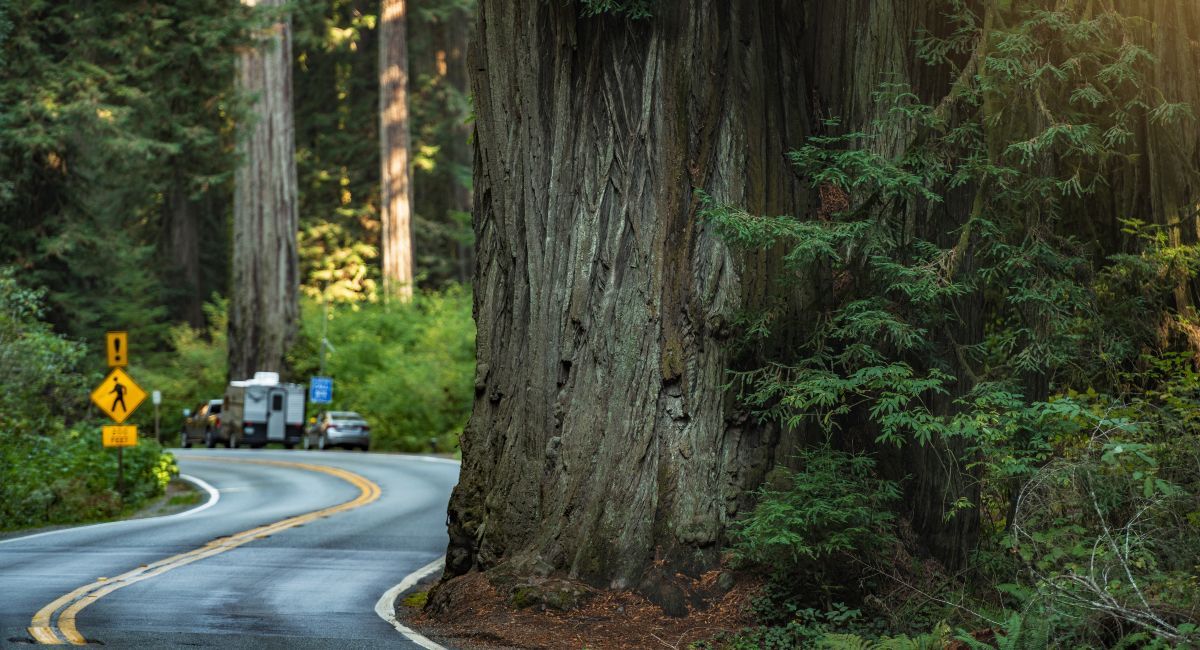
Renters who've driven Newton B. Drury Scenic Parkway call it the single best 20 minutes of driving in their trip — and most of them have also done the Pacific Coast Highway. The difference is that on the parkway, the trees form a canopy over the road. You're driving through the forest, not past it. Stop at Big Tree Wayside to stand next to a 304-foot redwood and recalibrate your sense of scale. The Prairie Creek–Foothill Loop trail is wheelchair-accessible and starts from a parkway pullout.
Howland Hill Road — old-growth unpaved
- Length: 10 miles (only about 6 miles unpaved)
- Surface: Unpaved, narrow, winding
- RV access: Campervans and passenger vehicles only. No trailers, no RVs over 20 feet
- Access: From Elk Valley Road off Highway 199 near Crescent City
- Time: 30–45 minutes
Howland Hill passes through Stout Memorial Grove — one of the most impressive old-growth groves on Earth. The road is too narrow for anything bigger than a campervan, but if you're in the right rig, it's the most immersive redwood driving experience in the park. Pull off at Stout Grove trailhead for a short loop among trees that were growing before Columbus.
Coastal Drive — ocean and old-growth
- Length: 8 miles
- Surface: Partly paved, partly gravel
- RV access: Small RVs only (under 24 feet). Not recommended for trailers
- Access: Highway 101 between Crescent City and Klamath
A loop drive combining ocean bluff views with redwood forest. Parts of the road follow the old Highway 101 alignment before the modern route was built. Small campervan territory.
Avenue of the Giants — the nearby essential
- Length: 31 miles
- Surface: Paved, two-lane
- RV access: All vehicles. Wide road with ample pullouts
- Location: Humboldt Redwoods State Park, about 1.5 hours south of Elk Prairie on Highway 101
Not technically inside Redwood National and State Parks, but most RV travelers combine them. The Avenue of the Giants winds through the world's largest contiguous old-growth redwood forest — 51,222 acres of uncut trees. The Founders Grove and Rockefeller Forest are here. Several campgrounds along the route accept RVs if you want to add a stop.
How do you plan an RV route through the Redwoods?
The parks stretch 40 miles north-to-south along Highway 101. Pick a direction and work your way through, spending 2–3 nights at each campground area.
Suggested north-to-south route
Base 1: Jedediah Smith (2–3 nights)
Start at the northernmost campground. Drive Howland Hill Road (if your rig fits). Swim or kayak the Smith River. Hike Stout Memorial Grove and Simpson-Reed Trail. Stock up in Crescent City before heading south.
Base 2: Elk Prairie (2–3 nights)
Drive Newton B. Drury Scenic Parkway — multiple times if you want. Hike to Gold Bluffs Beach and Fern Canyon (the day-use area, not the campground). Watch Roosevelt elk at dawn from the prairie meadow. If you're in a small van, spend one night at Gold Bluffs Beach for the coastal camping experience.
Base 3: Avenue of the Giants extension (1–2 nights)
Continue south on Highway 101 to Humboldt Redwoods State Park. Drive the full 31-mile Avenue of the Giants. Hike Founders Grove. Camp at Burlington or Hidden Springs campground.
Driving distances
- Crescent City → Jedediah Smith: 10 miles, about 15 minutes
- Jedediah Smith → Mill Creek: 17 miles, about 25 minutes
- Mill Creek → Elk Prairie: 35 miles, about 45 minutes
- Elk Prairie → Gold Bluffs Beach: 8 miles, about 20 minutes
- Elk Prairie → Avenue of the Giants (north end): 75 miles, about 1.5 hours
- San Francisco → Crescent City (via US-101): 350 miles, about 5.5 hours
- Sacramento → Crescent City (via I-5 to US-101): 330 miles, about 5 hours
Fuel and supplies
No gas stations inside any of the four parks. Fill up in Crescent City (full services, north end), Klamath (limited), Orick (small town, basic supplies), or Trinidad/Arcata/Eureka (full services, south). Crescent City is your best resupply point for the northern campgrounds.
Cell service
Minimal to nonexistent inside the parks. Some service in Crescent City and along Highway 101 near towns. Download offline maps and check campground availability before you enter the park corridor. Browse California campground options before you lose signal.
Where should you rent an RV for Redwood National Park?
Two Northern California cities work for pickups — and your rig choice matters more here than at almost any other park.
San Francisco, CA (5.5 hours)
We recommend San Francisco pickups for Redwood trips even though Sacramento is slightly closer by the clock — the US-101 coastal route through Mendocino and Humboldt counties is part of the experience. Most renters end up adding a night at a campground along the way. The drive passes through coastal redwood country well before you reach the national park.
Browse San Francisco RV rentals for options.
Sacramento, CA (5 hours)
Take I-5 north to Highway 299 west through the Trinity Alps, or I-5 to US-101 via Redding. Faster clock time than San Francisco, but a less scenic route. Sacramento works if you're combining the Redwoods with Lassen Volcanic National Park or Shasta.
Browse Sacramento RV rentals for options.
What to rent for the Redwoods
The Redwoods' size limits make this decision more important than at most parks:
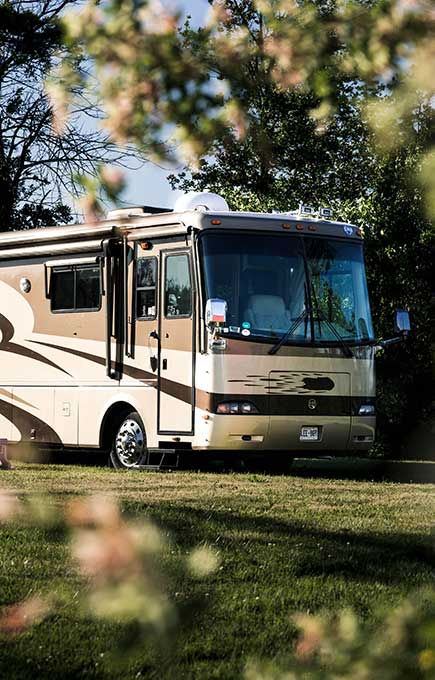
- Best choice: A campervan or Class B under 22 feet. This gets you into every campground, down Howland Hill Road, onto Gold Bluffs Beach, and through the Coastal Drive loop. Maximum flexibility. The Class A motorhome you'd rent for Yellowstone won't work here.
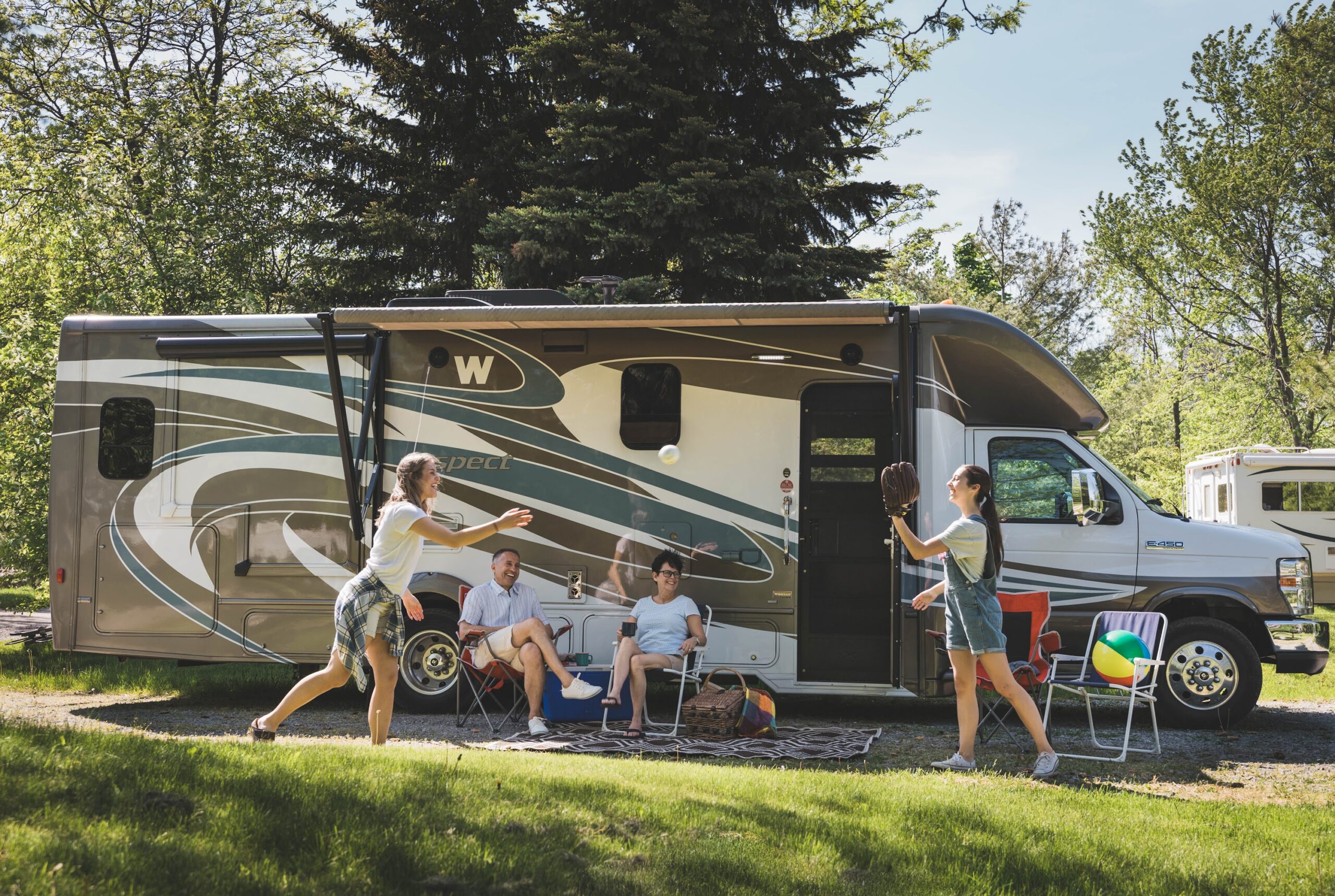
- Workable option: A short Class C at 24–27 feet. You'll fit Mill Creek (28 ft max) and Elk Prairie (27 ft max) but may be tight at Jedediah Smith (25 ft max) and locked out of Gold Bluffs Beach (24 ft max, 8 ft width). Howland Hill Road is off-limits.
- Won't work: Anything over 28 feet, any large trailer, any fifth wheel. The campgrounds physically cannot accommodate them.
If you're flexible on campgrounds and want to boondock along the way, the US-101 corridor has dispersed camping options on BLM and national forest land between San Francisco and Crescent City.
About this guide
This guide draws on campground data, RV size limits, and fee information from the NPS Redwood developed campgrounds page and the NPS fees and passes page. Scenic drive details reference the NPS Newton B. Drury Scenic Parkway guide. Campground-by-campground details were cross-referenced against the National Parks Traveler Redwood camping guide. RV-specific insights — including rig-size patterns and route preferences — reflect Outdoorsy's rental and booking data for Northern California trips.