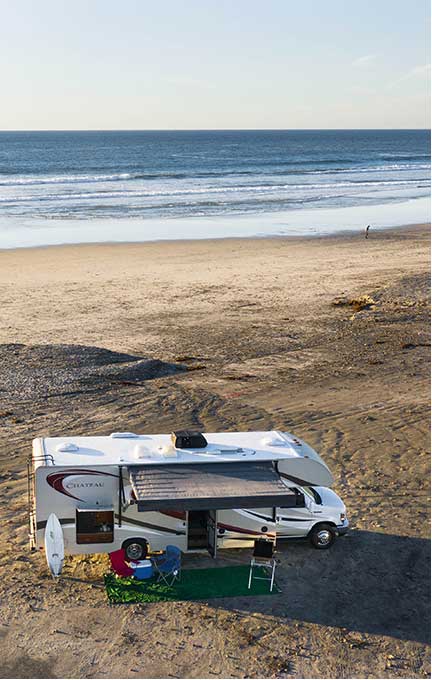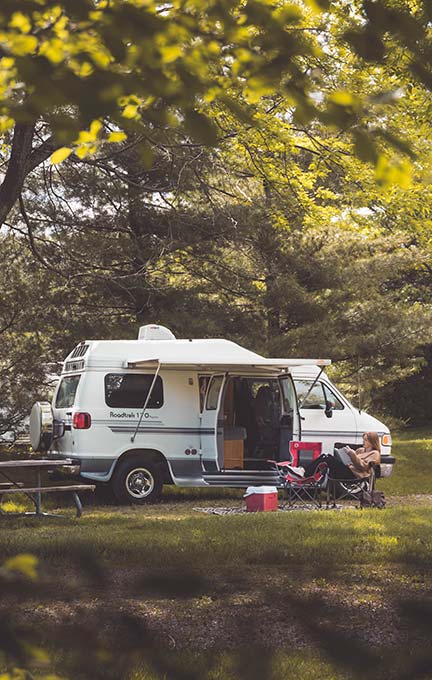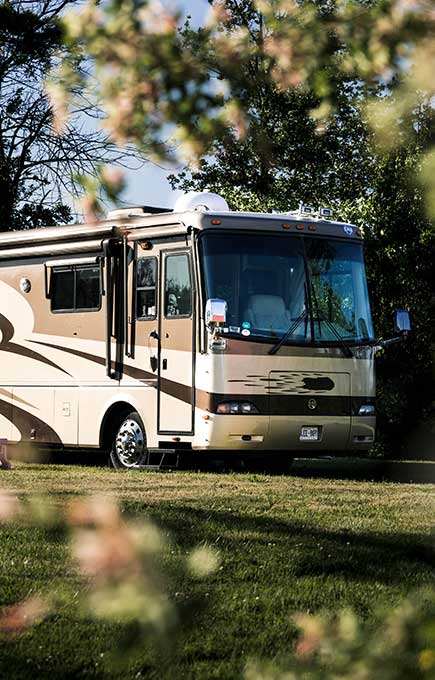



Boondocking is camping in your RV without hookups — no shore power, no water spigot, no sewer — usually for free on public land like Bureau of Land Management (BLM) acreage and national forests. When established campgrounds are booked solid, boondocking opens up quiet sites with big views. It takes more planning than an RV park: you'll live on your onboard batteries, water, and holding tanks, and you'll need to follow each agency's stay limits. This guide covers what boondocking is, where it's legal, how long your rig can last, and what to ask your host if you're renting.
At a Glance
- Boondocking = camping without hookups, often free on BLM land and in national forests.
- Stay limits apply: BLM generally allows 14 days within any 28-day period, then you move — often at least 25 to 30 miles.
- Your gray tank usually fills first, and fresh water is the next limit.
- Renting? Ask your host whether the RV can leave pavement and how it's set up for power.
- Overnight parking lots like Walmart are store-by-store — always ask.
What is boondocking?
Boondocking is camping without hookups, relying only on your RV's onboard water, electrical, and waste systems. It most often happens on public land away from developed campgrounds, which agencies call dispersed camping. Dry camping is similar — no hookups — but usually happens inside an established campground or RV park.
The BLM puts it simply: "Camping on public lands away from developed recreation facilities is called dispersed camping." Boondocking sites are almost always free, almost always first come, first served, and rarely take reservations. The trade-off is no amenities — as the Coronado National Forest notes, "Potable water, restrooms, trash bins, and other amenities are not available at dispersed sites."
New to the concept? Start with our Boondocking 101.
- Boondocking — Hookups?: None; Where it happens: Public land, overnight lots, friends' driveways; Cost: Usually free.
- Dry camping — Hookups?: None; Where it happens: Inside a campground or RV park; Cost: Campground fee.
- Dispersed camping — Hookups?: None; Where it happens: Public land outside developed campgrounds; Cost: Usually free.
For a beginner-friendly take on camping without hookups inside a campground, see our guide to dry camping for beginners.
Is boondocking legal?
Yes, in many places. Most BLM land allows dispersed camping unless an area is posted closed, and dispersed camping is allowed across most of many national forests. On private property, such as store parking lots, you need permission. Rules vary by state, field office, and forest, so check locally.
The BLM says most of its lands allow dispersed camping unless an area is posted "Closed to Camping" or has specific restrictions, and adds that "Rules can vary by state or local area, so always comply with posted signs and verify specifics with your local BLM office." On the national forest side, the Coronado National Forest says "Dispersed, primitive camping is allowed across most of the Coronado National Forest for free." Our guide on how to camp on BLM land goes deeper.
Where can you boondock?
The most common boondocking spots are BLM land and national forests, followed by select state and county parks and overnight-friendly business parking lots. Some RVers also "moochdock" in the driveways of friends and family. Always confirm permission for private property and follow posted rules on public land.
- Bureau of Land Management land — much of it in the West.
- National forests — use the forest's Motor Vehicle Use Map to find legal roads and, in many forests, dispersed camping corridors.
- State and county parks — some offer primitive sites.
- Overnight-friendly businesses — select Walmart, Cabela's/Bass Pro, and Cracker Barrel locations, for one night, with permission.
- Moochdocking — the fine art of camping in the driveways of family and friends.
Walmart is the one everyone asks about. RV parking policies are subject to store manager discretion and that some cities have banned overnight RV parking in business lots. Call the store or ask a manager before you settle in. Our post on overnighting at Walmart covers etiquette, and our guide to finding free RV overnight parking lists more options.
How do you find boondocking sites?
Start with official maps from the BLM and the Forest Service, then use free-campsite apps and websites to scout specific spots, recent conditions, and road access. Check the area's stay limits, fire restrictions, and road conditions before you go, and have a backup site in mind.
- Agency maps and offices: BLM field offices and national forest Motor Vehicle Use Maps show where camping and driving are allowed.
- iOverlander: crowd-sourced campsite and services map, popular with overlanders.
- Freecampsites.net: the name says it all.
- AllStays: app with campground, low-clearance, and truck-stop info.
- Brand clubs: some RV owner clubs, like the Airstream club, run member courtesy-parking networks.
RVers we talk to out West rarely pay for a site between spring and fall — but they scout before they commit, especially on dirt roads.
How long can you boondock?
Most RVers can boondock two to four days before low batteries, a full gray tank, or an empty freshwater tank forces a move. On public land, the rules also cap your stay: the BLM generally allows 14 days within any 28-day period, and national forests usually set similar 14-day limits.
The BLM says "Dispersed camping is generally limited to 14 days within any 28‑day period," with limits that vary by state and field office. After that, "visitors must move to a new location — often at least 25 to 30 miles away." In California's national forests, stays are "usually 14 days, but this can be further limited in some National Forest areas." Some forests are stricter: the Apache-Sitgreaves National Forest allows no more than 14 days in a 30-day period, then requires you to leave the forest for at least 16 days.
Your rig sets the practical limit. Our rules of thumb from the original guide still hold:
- House batteries (one or two 12-volt) — Typical stock RV: Lights, water pump, furnace fan; About how long: 2–4 days with careful use.
- Fresh water (about 40 gallons) — Typical stock RV: Two people, short showers; About how long: 4+ days.
- Gray tank — Typical stock RV: Home-style showers; About how long: 1–2 days — conserve.
- Black tank — Typical stock RV: Light flushing; About how long: Usually outlasts the others.
These are Outdoorsy estimates for typical rental RVs; check your rig's tank sizes and battery setup.
In our experience, the gray tank is what sends first-time boondockers to the dump station. Take quick showers, wash dishes in a basin, and fill water bottles at every stop.
Can you boondock in a rental RV?
Yes, many rental RVs are boondock-ready, but ask the host first. Confirm the RV can be driven on dirt or gravel roads, whether it has solar or a generator (and any generator fee), how big the tanks and batteries are, and what roadside coverage applies off pavement.
Hosts tell us the most common boondocking question is whether the rig can leave pavement. Questions to send before you book:
- Is the RV allowed on dirt or gravel roads?
- Does it have solar panels, a generator, or both? Is there a generator-hour fee?
- How big are the fresh, gray, and black tanks?
- How many house batteries, and what type? Is there an inverter?
- What's the ground clearance?
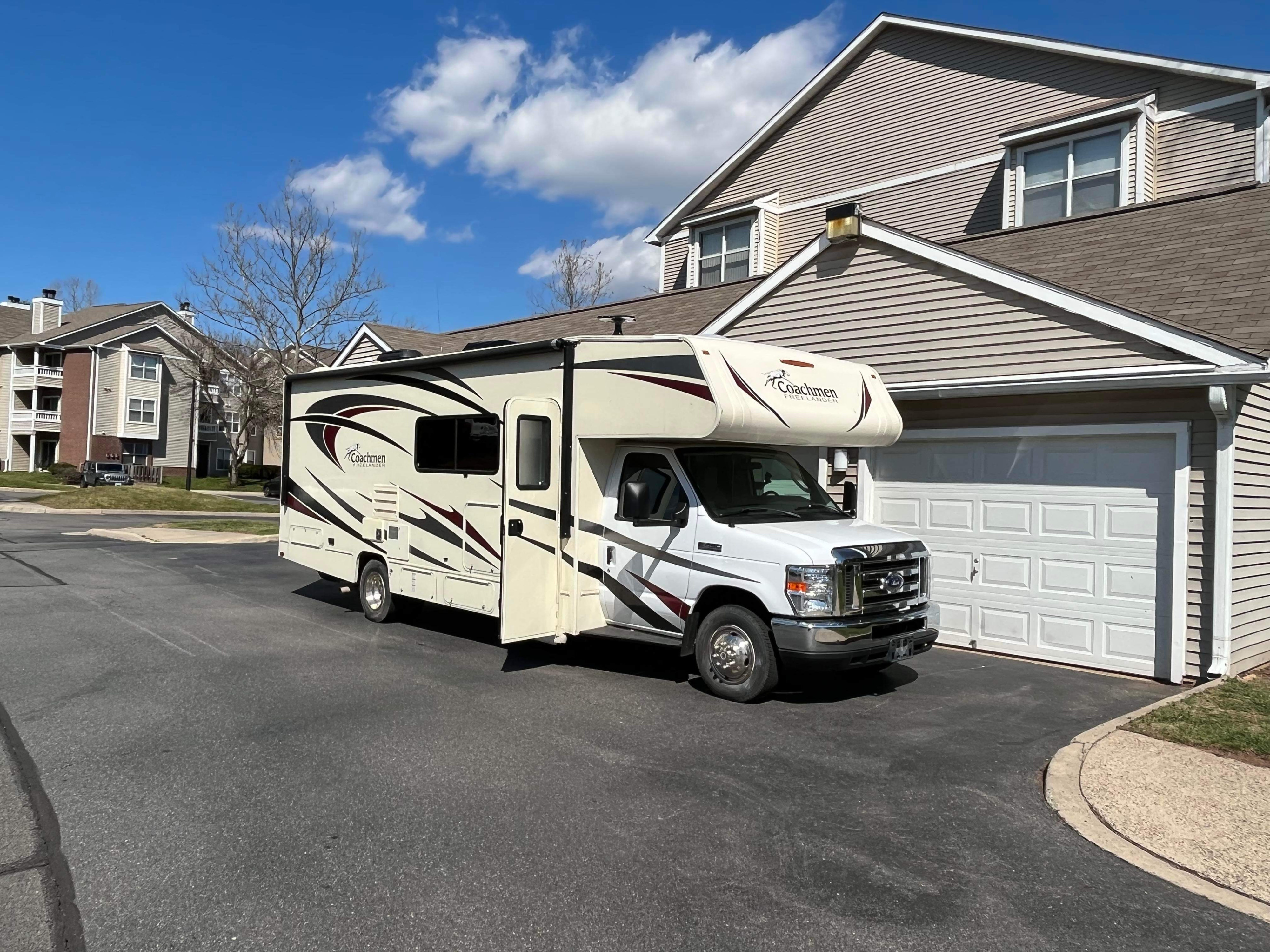
Shorter rigs handle narrow, rough roads best. A solar-equipped camper van or a compact Class C is a great first boondocking rental — browse RV rentals in Los Angeles for desert-ready options near Southern California's public lands.
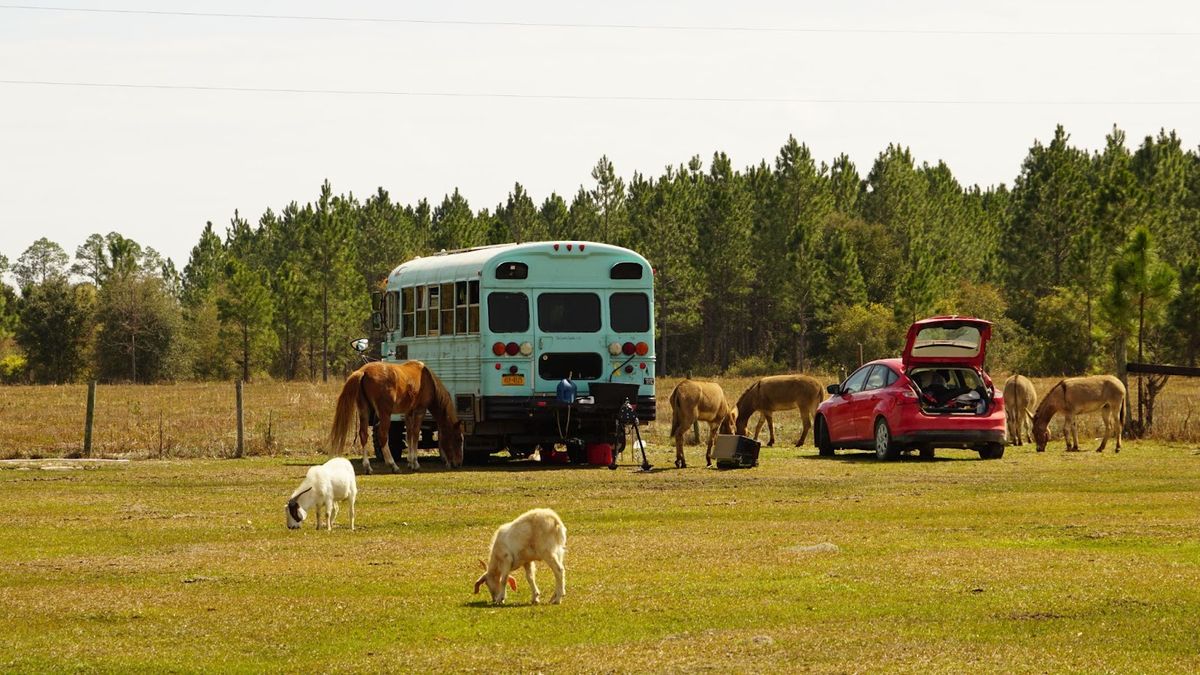
Boondocking basics: power, water, waste, internet, and clearances
Boondocking basics come down to managing five things: battery power, fresh water, wastewater, connectivity, and ground clearance. Know your rig's capacities before you go, conserve from the first night, and plan how you'll recharge, refill, and dump before you run out.
Electricity and charging
Factory RVs typically run lights, the water pump, and the furnace fan off one or two 12-volt house batteries. Without an inverter, standard outlets and the microwave won't work, and even with one, most stock battery setups can't run air conditioners or electric heaters for long. Recharge by driving to shore power, running a generator, or adding solar — and upgrading RV batteries stretches your stay. Check generator rules: Joshua Tree, for example, permits generators only from 7–9 a.m., noon–2 p.m., and 5–7 p.m. in its campgrounds.
Water
RV freshwater tanks typically range from about 20 gallons in a camper van to around 100 gallons in a large Class A motorhome. Know yours. For longer stays, portable water bladders let you refill without breaking camp. We've watched couples stretch a 40-gallon tank past four days just by switching to a dish basin and navy showers.
Wastewater
The gray tank fills fastest. To extend a stay, break camp to dump or use a portable waste tote. If there are no facilities, the same California Forest Service page says to dig a hole six inches deep at least 100 feet away from any water source for human waste.
Internet
Coverage is hit or miss. Phone hotspots work near cell towers, and satellite internet and cell boosters have made remote work possible at more sites. Still, the quiet is part of the point — RVers we've met on public land say the best nights are the ones with no bars at all.

Clearances
Many boondocking roads are rough. Know your ground clearance so you don't drag the rear or tear off drain and gas lines. The BLM says "Vehicles must stay on designated roads and trails" unless an area is designated for off-road use. If you can, scout ahead in a tow car before committing the RV.
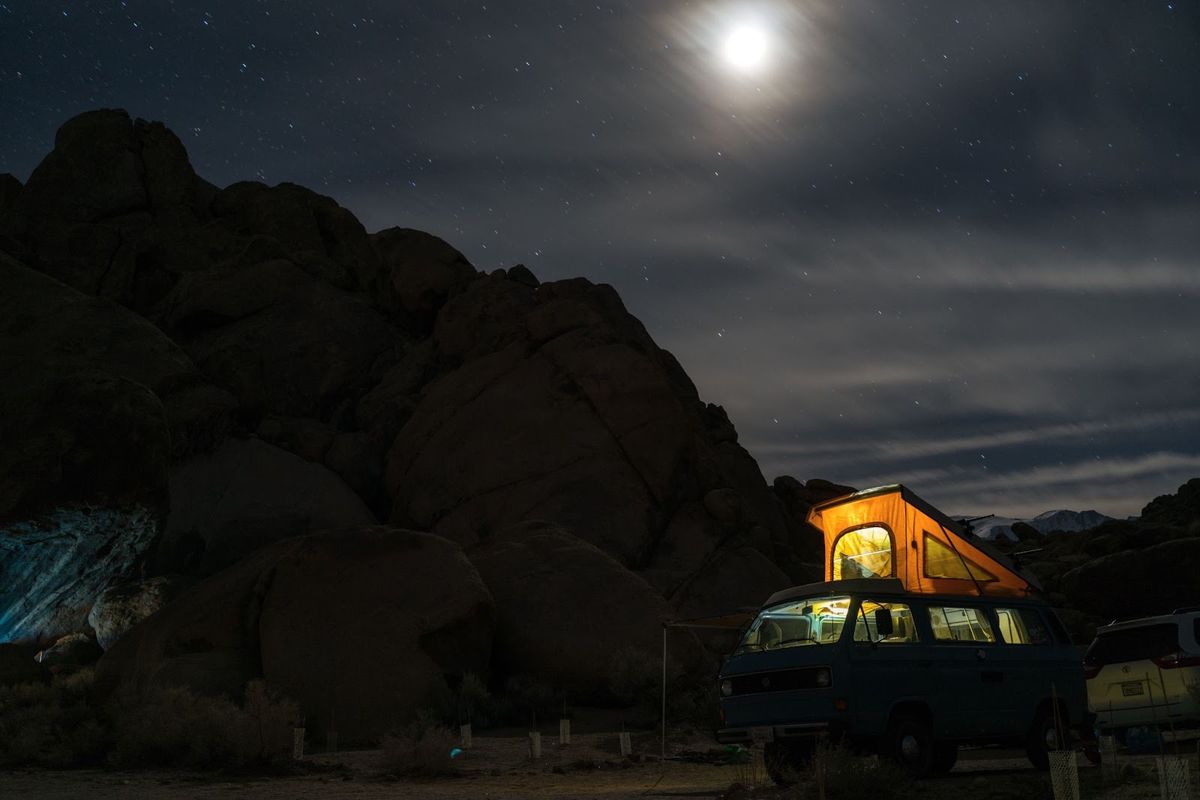
Boondocking etiquette and Leave No Trace
Good boondocking etiquette means giving other campers space, keeping noise and lights low, staying on existing roads and sites, packing out all trash, and following Leave No Trace. Treat public land like it's yours — because it is — so it stays open and clean for the next camper.
Leave No Trace's seven principles are the foundation: "Plan Ahead & Prepare," "Travel & Camp on Durable Surfaces," "Dispose of Waste Properly," "Leave What You Find," "Minimize Campfire Impacts," "Respect Wildlife," and "Be Considerate of Others." A few practical rules:
- Spread out — set up well away from other campers.
- Keep it quiet — no late-night music, generators, or bright lights.
- Use existing sites and fire rings, and check fire restrictions; California national forests require a free campfire permit outside developed sites.
- Don't leave gear behind — the BLM limits leaving personal property to 10 days in most states.
- Watch wildlife from a distance, and store food properly.
Boondocking checklist
Before you head out, top off fresh water, empty your gray and black tanks, charge your batteries, and confirm your site's rules. Bring leveling blocks, extra water, groceries for the whole stay, and a backup site.
Timing helps too. Many RVers follow the 3-3-3 rule — no more than 300 miles a day, arrive by 3 p.m., stay three nights — and an early arrival gives you daylight to scout a rough road.
- Confirm you're rolling in a boondock-ready rig.
- Top off your freshwater tank.
- Fully charge your batteries.
- Know how to use your generator or solar charger.
- Empty your black and gray tanks.
- Check the weather — mild temperatures mean less power for heating and cooling.
- Stock groceries and supplies.
- Check stay limits, fire restrictions, and road conditions.
- Bring leveling blocks.
- Pack water bladders or a waste tote for longer stays.
Ready to camp off the grid? Browse boondock-ready RV rentals near you and set out on the roads less traveled. Find what moves you.
About this guide
This guide was originally written by Josh Schukman in 2024 and updated by the Outdoorsy editorial team in October 2026. Our information draws on the Bureau of Land Management, the U.S. Forest Service, the National Park Service, Leave No Trace, national news reporting, and conversations with Outdoorsy hosts and renters who boondock. We have no commercial relationship with the businesses mentioned unless explicitly noted.